

Citizen Science for River Protection: How You Can Contribute to Bharathapuzha’s Health
The Bharathapuzha lovingly called Nila is not just a river. It is memory, livelihood, poetry, agriculture, biodiversity, and identity. Flowing across Palakkad, Malappuram, and Thrissur districts, it has shaped the cultural and ecological landscape of Kerala for centuries.
Yet today, the river faces mounting pressures: reduced flow, pollution, sand mining, encroachments, and climate variability. Governments and institutions have roles to play but rivers cannot be saved by policy alone. They need people. This is where Citizen Science becomes powerful.
What is Citizen Science?
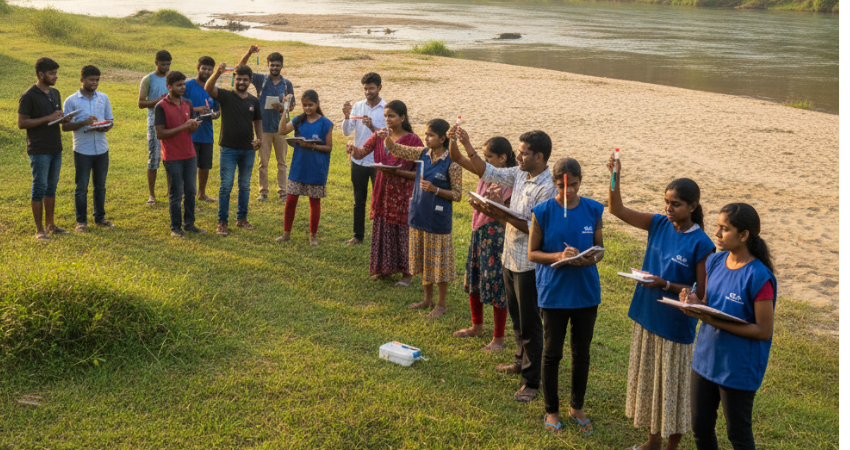
Citizen science is simple yet transformative:It means ordinary people contributing to scientific research and environmental monitoring. You do not need a PhD to protect a river. You need awareness, commitment, and a willingness to act. When local residents observe water quality, document pollution sources, measure rainfall, report illegal dumping, or participate in biodiversity mapping — they become the eyes and ears of the river.
“A river doesn’t die in silence it dies when people stay silent.”
Citizen science turns silence into action.
Why Citizen Science Matters for Bharathapuzha
The Bharathapuzha basin is vast. No single department or NGO can monitor every stretch daily.
But thousands of citizens living along its banks can.
When communities participate:
- Pollution is identified early
- Illegal activities are reported quickly
- Data becomes locally relevant
- Authorities are held accountable
- Youth become environmental leaders
Friends of Bharathapuzha (FOB) believes that community-powered data is stronger than isolated complaints.
“If you drink from the river, you are already part of its story. Now become part of its protection.”
How You Can Contribute
Here are practical, realistic ways individuals can join the movement:
- Monitor Water Quality
Basic water monitoring does not require advanced laboratories. Citizens can:
- Observe water color, odor, and foam presence
- Measure temperature and turbidity using simple kits
- Record seasonal flow changes
- Photograph pollution points
FOB can help train volunteers in standardized data recording methods so information becomes usable for research and advocacy.
Imagine every village along the river having two trained “River Observers.” The impact would be enormous.
- Report Pollution and Encroachments
Untreated sewage discharge, waste dumping, and illegal constructions often go unnoticed because no one formally documents them.
You can:
- Take geo-tagged photos
- Record date and location
- Share verified reports with FOB or local authorities
Structured documentation strengthens legal and administrative action.
“Don’t just complain about pollution. Document it.”
- Participate in River Biodiversity Mapping
Rivers are ecosystems not pipelines of water.
Citizens can help record:
- Fish species
- Birds along riverbanks
- Riparian vegetation
- Invasive species
School and college students can conduct biodiversity walks and submit findings. Over time, this creates a living ecological database of Bharathapuzha.
- Join Clean-Up Drives and Plantation Programs
While systemic solutions are critical, physical action builds community ownership.
FOB organizes:
- Riverbank cleaning campaigns
- Native tree plantation drives
- Awareness marches
- Educational workshops
These are not symbolic acts. They build collective responsibility.
“The river gave us life. Giving back one day of service is the least we can do.”
- Practice and Promote Sustainable Living
Citizen science is not only about data collection. It’s also about changing habits.
You can:
- Reduce plastic use
- Compost organic waste
- Avoid chemical fertilizers near waterways
- Promote rainwater harvesting
- Educate children about river conservation
Every household action impacts river health.
Youth: The River’s Strongest Force
Young people are digital, connected, and energetic. They can:
- Create social media awareness campaigns
- Develop mobile apps for pollution reporting
- Conduct school-level river projects
- Organize eco-clubs
Through initiatives like river education programs and volunteer brigades, FOB encourages youth leadership in conservation.
“Today’s students must become tomorrow’s river guardians.”
From Data to Policy: Why Your Contribution Matters
When citizens collect reliable information:
- Trends in water quality become visible
- Seasonal changes can be scientifically analyzed
- Evidence supports policy demands
- Authorities cannot ignore documented proof
Citizen science strengthens democracy. It ensures environmental governance is participatory not distant.
Building a River Community
Protecting Bharathapuzha is not about nostalgia. It is about survival — ecological and cultural.
Climate change is altering rainfall patterns. Urban growth is increasing waste loads. Agricultural practices are intensifying chemical runoff. The river needs informed defenders.
Citizen science creates:
✔ Awareness
✔ Accountability
✔ Action
✔ Ownership
Most importantly, it creates hope.
A Final Call
The Bharathapuzha does not belong to one district, one organization, or one generation. It belongs to all of us.
“A river is not inherited from our ancestors — it is borrowed from our children.”
If you live near Nila, you are already connected to it. Now take the next step.
Observe. Record. Report. Plant. Educate. Participate.
Because when citizens become scientists, and communities become guardians, rivers begin to heal.
BECOME A PART OF FOB…
Let Bharathapuzha flow not just with water, but with collective responsibility.
