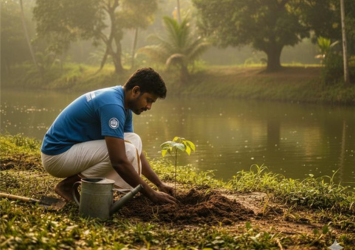

Catchment Restoration – Preventing Rainwater Loss in Bharathapuzha Basin
Healthy catchment areas play a crucial role in conserving rainwater and sustaining river flow. When native flora in the catchment regions declines due to deforestation, land-use changes, or human intervention, rainwater is no longer absorbed and retained by the soil. Instead, it flows rapidly and forcefully into streams and rivers, eventually draining into the Arabian Sea without replenishing groundwater reserves.
This rapid runoff not only results in the loss of precious freshwater but also increases soil erosion, sedimentation in the river, and flood risks during monsoons. Historically, native plant and tree species in these catchment areas acted as natural sponges—slowing down rainwater, enhancing infiltration, maintaining soil moisture, and supporting biodiversity.
To restore ecological balance, it is essential to identify the indigenous species of plants and trees that have thrived in these regions for decades. Promoting and replanting these native species will help rebuild the natural water retention capacity of the land, strengthen groundwater recharge, stabilize soil, and ensure sustained river flow even during dry seasons.
Restoring catchment vegetation is not just about planting trees—it is about reviving an ecological system that protects water security for future generations.
Key Actions to Prevent Rainwater Loss
Restore Native Vegetation
Reduce Surface Runoff
Enhance Groundwater Recharge
Protect Catchment Ecosystems