

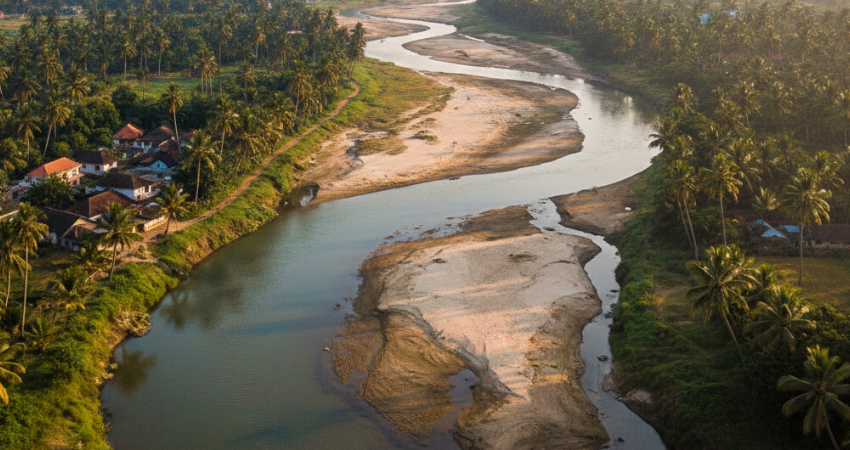
The Bharathapuzha also lovingly known as Nila, the lifeline of central Kerala is more than just a river. It has been a cradle of culture, a source of water for agriculture and human consumption, a symbol of spiritual heritage, and a pulsating artery connecting communities across Palakkad, Thrissur, and Malappuram districts. Yet today, this once free-flowing river is gasping for survival. Its struggle reflects decades of environmental neglect, unplanned development, and growing human pressures.
At Friends of Bharathapuzha (FOB), we believe the revival and protection of this river is not just an ecological necessity it is a cultural duty and a sustainable future imperative.
The River in Crisis: Environmental Threats Facing Bharathapuzha
Despite its importance, the Bharathapuzha River faces multiple serious threats that have contributed to its degradation:
- Sand Mining and Loss of Riverbed
For over three decades, rampant sand mining has significantly damaged the river’s natural structure. Sand, which once accumulated over millions of years, has been removed rapidly to meet construction demands. This has thinned the riverbed and altered natural flow, reducing groundwater recharge and threatening agricultural livelihoods.
- Reduced Water Flow
Unlike Kerala’s wetter rivers, Bharathapuzha’s basin lies partly in drier regions and flows through rain shadow areas. This, combined with water diversions for irrigation and dam reservoirs, has drastically reduced its natural streamflow during most of the year.
- Pollution from Sewage and Waste
Urban growth along the river has increased untreated sewage entering the water. Several towns lack effective sewage treatment systems, leading to raw waste directly polluting the river.
- Agricultural and Chemical Runoff
Farms along the riverbanks contribute pesticides and chemical fertilizers into the water, further degrading water quality and upsetting the river’s delicate ecological balance.
- Encroachments and Habitat Loss
Riverbank encroachments for housing, agriculture, and unregulated infrastructure developments have narrowed river channels and destroyed riparian habitats essential for biodiversity.
Why the River Matters
Bharathapuzha is the second-longest river in Kerala and has traditionally supported life and livelihoods in vast rural districts. It not only sustains irrigation and drinking water needs but also holds significant cultural and spiritual importance hosting historic festivals and ceremonies such as the Mahamagham attesting to its deep connection with communities.
FOB’s Vision for Revival: Practical Solutions
At FOB, we believe in a multi-layered approach to restore the Bharathapuzha — combining science, policy advocacy, community involvement, and sustainable development.
- Regulated Sand Management and Riverbed Protection
Completely unregulated sand mining must end. Instead, sustainable regulation that protects riverbeds while providing for local economic needs is essential. Adopting strict riverbed usage rules and enforcing them with technology such as drones and river monitoring systems can help preserve the river’s natural structure.
- Enhancing Natural Flow and Wet Season Recharge
We must work with government agencies to re-evaluate water releases from dams and check dams to mimic natural seasonal flows. This ecological flow is critical to ensure river sustainability throughout the year, especially during dry months.
- Effective Waste Management Infrastructure
Municipal and district authorities must be pressured to install efficient sewage and wastewater treatment systems for urban areas along the river. Without this, untreated effluents continue to degrade the river’s health. Grants, public-private partnerships, and community-monitored solutions can expedite implementation.
- Plantation Drives and Riparian Buffer Restoration
Reforestation of riverbanks with native trees like banyan, jackfruit, and other deep-rooted species will help enhance groundwater recharge, strengthen river banks, and protect biodiversity. Community tree-planting campaigns can mobilize youth and local residents in large numbers.
- Community Engagement and Awareness
The heart of river revival lies with its people. Educating farmers on organic farming, sustainable irrigation practices, and minimizing chemical runoff will help restore water quality. NGO-government-community partnerships can create watershed development groups to care for sub-basins.
- Policy Advocacy and River Authority Formation
FOB strongly advocates for a dedicated River Protection Authority — a state or regional body entrusted with enforcing environmental laws, coordinating conservation efforts, and resolving conflicts between development and preservation. Funds collected from resource usage (e.g., controlled sand mining licenses) should be legally earmarked for river conservation.
Success Stories and Hope on the Horizon
Across Kerala, local efforts show the power of grassroots engagement. In Palakkad, community women leaders used MGNREGA funds to dig wells, build rainwater harvesting structures, and improve groundwater recharge, indirectly supporting river health.
Such initiatives remind us that when communities unite with vision and purpose, even a river on the edge of collapse can find pathways to revival.
Conclusion: A Call to Collective Action
The Bharathapuzha River’s challenges are complex and deep-rooted, but they are not insurmountable. A combination of smart policy, scientific interventions, community participation, and cultural restoration can ensure that Nila flows vibrant once again not just as a water body, but as a living symbol of our commitment to environment and heritage.
Friends of Bharathapuzha calls upon citizens, civic bodies, policymakers, and every lover of Kerala’s rivers to join this cause because saving the river is not just an environmental mission, but a legacy for future generations.
