

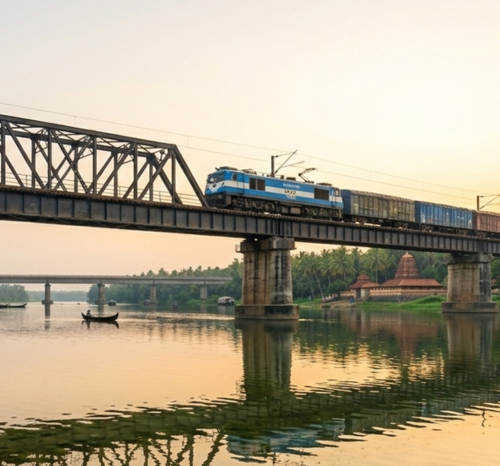

About Bharathapuzha
A River of Culture and Survival
Bharathapuzha, also known as the Nila, is Kerala’s second longest river, stretching 209 km from the Anamalai Hills in Tamil Nadu to the Arabian Sea at Ponnani. Its vast basin supports agriculture, culture, and daily life across Palakkad, Malappuram, and Thrissur. Revered in literature and tradition, the river has inspired poets and nurtured communities for centuries. Yet decades of sand mining, pollution, and neglect have weakened its flow and vitality. Protecting Bharathapuzha means safeguarding Kerala’s heritage, environment, and future generations.
Route of Bharathapuzha
From Origin to Uppar Junction (Tamil Nadu)
From Uppar Junction to Kerala Border
From TN Border to Parali Sangamam (Chittur Puzha)
From Parali Sangamam to Ponnani Azhimukham
Tributaries and Sub Tributaries
Major Tributaries of Bharathapuzha
Gayathripuzha
Kalpathipuzha
Thuthapuzha
Kannadipuzha
Tributaries and Sub Tributaries
Sub Tributaries of Bharathapuzha
Gayathripuzha Basin
Kalpathipuzha Basin
Thuthapuzha Basin
Kannadipuzha Basin
Reservoirs and Check Dams of Bharathapuzha
Bharathapuzha is not a perennial river; its waters swell mainly during the monsoon. Because of its steep hydraulic gradient, rainwater released into the river rushes to the Arabian Sea within just 48 hours. To store and regulate this flow, a series of reservoirs and dams have been constructed, including Trimurti, Aliyar, Walayar, Malampuzha, Pothundi, Mangalam, Chulliyar, and Meenkara, supported by regulators at Moolathara, Velliyankallu, and Chamravattam. Alongside these, several check dams—such as those at Kalpathi, Njavalin Kadavu, Lakkidi, Thrangali, Shoranur, Changanakkunnu, and Koottukadavu—play a vital role in managing water availability and sustaining the river’s course.
Traditions
Cultural History of Bharathapuzha
The banks of Bharathapuzha have nurtured some of the greatest minds in Malayalam literature.
- Thunchath Ramanujan Ezhuthachan, revered as the father of Malayalam, found inspiration here.
- M. T. Vasudevan Nair, Jnanpith awardee, carried forward that legacy with his profound narratives.
- Poets like Akkitham, P. Kunhiraman Nair, and Olappamanna gave voice to the river’s rhythm.
- Visionaries such as V. T. Bhattathiripad, Kunchan Nambiar, and Vallathol Narayana Menon enriched Kerala’s cultural renaissance.
- Scholars and writers like M. P. Shankunni Nair, Punnassery Neelakanda Sharma, K. P. Narayana Pisharody, C. Radhakrishnan, O. V. Vijayan, V. K. N., and Alancode Leela Krishnan grew up breathing the river’s air.
The riverbank is not just a landscape — it is a cradle of creativity.
Life along Bharathapuzha is steeped in celebration.
- The Velapurams are vibrant festivals unique to this region.
- Rituals like Aana-poorams, Aanayilla-poorams, Kaalaveela, Poothan, Thira, Thattinmelkoothu, Tholppavakoothu, and Devaratha Prayanam bring communities together.
- Fireworks, orchestras, and traditional art forms light up the nights.
- Classical performances — Koothu, Koodiyattam, Thullal, and Kathakali — transform the riverbank into a stage where devotion and artistry merge.
The festivities are not mere rituals; they are living expressions of Kerala’s cultural soul.
Bharathapuzha is also a river of myths.
- It is the birthplace of the Parayipetta Panthirukulam, one of Kerala’s most cherished legends.
- Of the twelve mythical children, ten belong to this riverbank, and their descendants still live here.
- Monuments and shrines along the river echo their stories, inviting travelers to walk with imagination and reverence.
To wander along Bharathapuzha is to step into a living tapestry of myth and memory.